
STAR WARS Zero Company has eight standard Specializations: Assault, Gunslinger, Heavy, Medic, Scoundrel, Scout, Sharpshooter and Soldier. Each has an Ultimate, a Standard ability and at least two Passives. These are tactical roles—not a complete list of authored identities such as Jedi or Mandalorian.
Compare the eight standard roles
Use this comparison to identify what a squad slot contributes. The ability names are the official English labels so you can match them to the in-game sheet. The table lists the core Ultimate and Standard ability; each class also has its own Passives.
| Specialization | Tactical role | Ultimate | Standard ability |
|---|---|---|---|
| Assault | Mobile close- and mid-range pressure; disrupts cover. | Sweeping Salvo | Bull Rush |
| Gunslinger | Quick shots and attacks against multiple targets. | Open Fire | Quick Draw |
| Heavy | Draws enemy attention and withstands incoming pressure. | Bulwark | Unstoppable |
| Medic | Healing, protection and support for the team. | Morale Boost | Combat Stim |
| Scoundrel | Creates opportunities for attacks and follow-up plays. | Easy Mark | Identify Weakness |
| Scout | Reconnaissance and support for squad positioning. | Ambush | Combat Recon |
| Sharpshooter | Long-range precision against selected targets. | Precision Shot | Zero In |
| Soldier | Mixed offensive tools, including melee, grenades and rockets. | Rocket Strike | Brutal Strike |
Scroll horizontally to see the whole table.
The distinction matters most when two operators appear to solve the same problem. Long-range precision, close-range pressure and team support create different opportunities; filling every slot with a damage-focused role does not automatically provide the protection or support your plan needs.
Abilities and changing Specializations
Hawks and custom operators can choose or change a standard Specialization. Authored operators have assigned Talents, and some authored operators have a Specialization that cannot be changed. Later in the campaign, operators can gain an additional Specialization, so a late-game build is not limited to the first role selected at creation.
Check the operator as well as the class. A class name explains the common ability kit; it does not erase a story operator’s unique talents or determine the Weapon Class. Equipment, available utilities and the abilities on the actual sheet are more useful planning information than a costume alone.
Choose by playstyle, not a universal tier list
EA’s post-launch guide gives concrete starting combinations:
- New to tactics: Soldier or Assault with a Blaster Rifle for straightforward movement and attacks.
- Maximum offensive pressure: Gunslinger, Soldier or Heavy with a Repeater.
- Long range: Sharpshooter with a Longarm Blaster.
- Mobility: Assault or Gunslinger with a Blaster Pistol.
- Planning and setup: Scout or Scoundrel; choose the weapon that supports the intended range.
- Squad support: Medic; choose a weapon that keeps the operator close enough to help without exposing them.
These are official playstyle suggestions, not proof that one class is best in every mission. Objectives, injuries, authored talents and the rest of the squad can change the answer.
Remember that a standard deployment contains four operators. You cannot bring every standard role at once, and Hawks occupies a slot on story missions. Use the squad-size guide to separate deployment limits from the larger reserve roster.
Jedi and other special operators
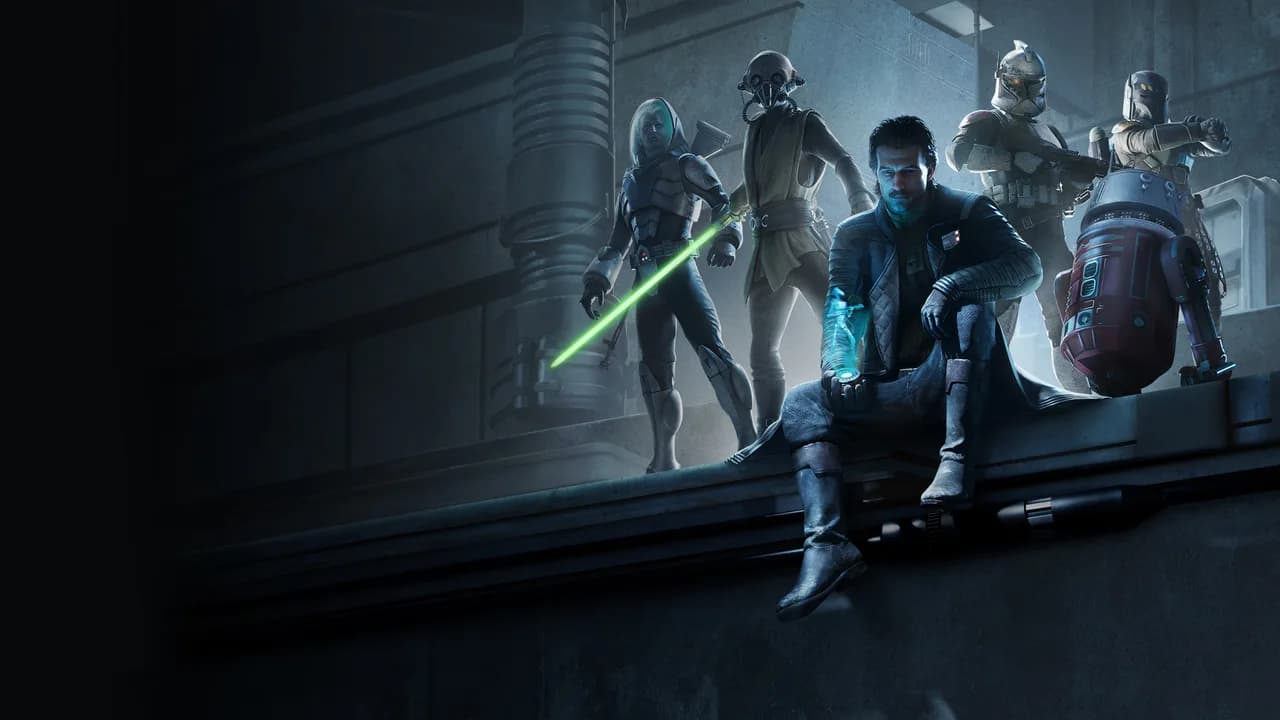
Tel-Rea is the authored Jedi Padawan; Hawks and custom humanoid operators cannot choose Jedi as a standard Specialization. Cly’s Mandalorian identity is also distinct from the ordinary role system. Cosmetic ARC Trooper armor does not convert an operator into a Mandalorian.
See Jedi and special operators for the differences between these characters, standard roles and recruitable astromechs.